The Year of the Fire Horse launches the 35th season of the Newport International Polo Series in grand style on Opening Day, Saturday, June 6, when Team USA faces Mongolia in a match that is both a debut and a full-circle moment for the ancient sport of polo. The occasion marks Mongolia as the 40th nation to raise its flag at the polo grounds—especially fitting during the 150th Diamond Jubilee at America’s First Polo Club.
In a season devoted to celebrating polo’s American heritage, it seemed only right to invite a team from the sport’s earliest homeland. More than 2,000 years ago – long before polo earned its nickname as the “Sport of Kings,” – mounted nomadic riders all across Central Asia were already chasing a ball across vast grasslands as part cavalry training, part sport, and entirely exhilarating.
As riders and empires moved, the game traveled with them. Legend has it that when Alexander the Great prepared to invade Persia in 334 BC, the Persian king Darius III sent him a polo mallet and ball—possibly suggesting he stick to sport rather than conquest. Alexander reportedly replied, “I am the stick, and the ball is the Earth.” History affirmed his appetite.
Centuries later, Genghis Khan kept the sport alive among his cavalry, spreading the game across an empire that stretched from Asia to Europe. Over time, polo evolved from rugged training exercise to royal pastime across Persia, India, and beyond.
The modern game arrived in England in 1874 when the Hurlingham Polo Association in England established the first official rules. Soon after, publisher James Gordon Bennett Jr. brought mallets, balls, and those rules back to America in 1876—introducing the game to his sporty friends who carried on at their summer retreat in Newport. And the rest is polo history.
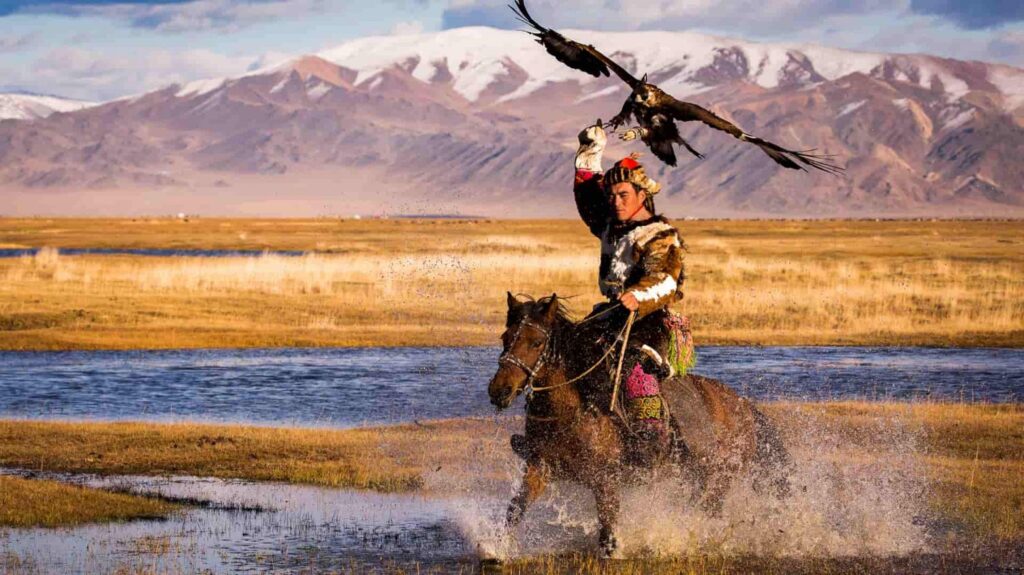
This season’s opener brings that journey full circle. Mongolia remains one of the world’s great horse cultures. The Year of the Horse—especially the rare Fire Horse year of 2026—carries deep cultural meaning, reflecting strength, speed, and resilience rooted in the nation’s nomadic heritage. Horses are so central to Mongolian life that they famously outnumber people, and a common saying holds that a Mongolian without a horse is like a bird without wings. The horse provides freedom, endurance, and mobility across the vast steppe, making the Horse year a time associated with forward momentum and opportunity.
When paired with the element of fire—an alignment that occurs only once every sixty years—the symbolism intensifies, suggesting bold energy, rapid change, and passionate progress. The horse is so fundamental to Mongolian identity that it appears on the nation’s state emblem, and pivotal moments in history—including the birth year of Genghis Khan and Mongolia’s democratic transition in 1990—have occurred in Horse years. Following a proposal by Mongolia, the United Nations declared July 11 as World Horse Day to honor the animal’s role in human civilization.
In every sense, this year celebrates the enduring bond between Mongolians and their horses while symbolizing a powerful season of resilience, independence, and spirited progress. We thank Official Team Lodging host, Hammetts Hotel for receiving the Mongolian team.
When Mongolia ride onto the field on June 6, we’ll be celebrating more than a season opener. They’ll be honoring a journey, and riding in on the Fire Horse and USA had better be ready. The story of polo—from the windswept steppes of Central Asia to the storied fields of Newport—is about to continue, galloping boldly into the summer ahead. Get your tickets.